Most homeowners looking into water softener installation Carmel IN want two numbers: what the equipment costs up front, and what it saves them over the years they own the house. The honest answer is that the second number is usually the larger of the two, because central Indiana water runs 15 to 25 grains per gallon and everything downstream of the meter pays for it. Indiana Flow is family-owned and run personally by Omar and Ahmad Saltagi, licensed in Indiana under PC12000053, insured, and backed by a 1-year labor warranty on every job. This guide covers what softening actually protects, how the pricing works, and how to tell whether your address needs it — or call 317-463-3569 and talk to an owner.
How Hard Is the Water in Hamilton County?
Central Indiana sits on limestone, and limestone puts calcium and magnesium into the groundwater. Local supply typically tests between 15 and 25 grains per gallon, which the industry classifies as very hard — the top of the scale, not the middle of it. For comparison, anything above 10 grains per gallon is generally considered hard enough to justify treatment.
That matters because hardness does not stay dissolved. Every time the water is heated, minerals drop out of solution and bond to whatever surface they land on: the inside of a tank, a heat exchanger, an aerator screen, a dishwasher heating element, a shower valve cartridge. The buildup is gradual, invisible until it is severe, and cumulative.
It also explains the symptoms Carmel households describe before they ever mention the word hardness — soap that will not lather, laundry that comes out stiff, spotting on glassware straight out of the dishwasher, a chalky ring at the base of every faucet, and shower doors that stay cloudy no matter what gets sprayed on them.
- 15–25 grains per gallon: the range central Indiana water typically tests at, classified as very hard.
- Scale is cumulative: the deposits build a little at a time and never redissolve on their own.
- Heat accelerates it: water heaters, dishwashers, and tankless units take the worst of it.
- Etching is permanent: glass and chrome that has been scaled for years does not polish back to new.
What Softening Protects — and What It Quietly Saves
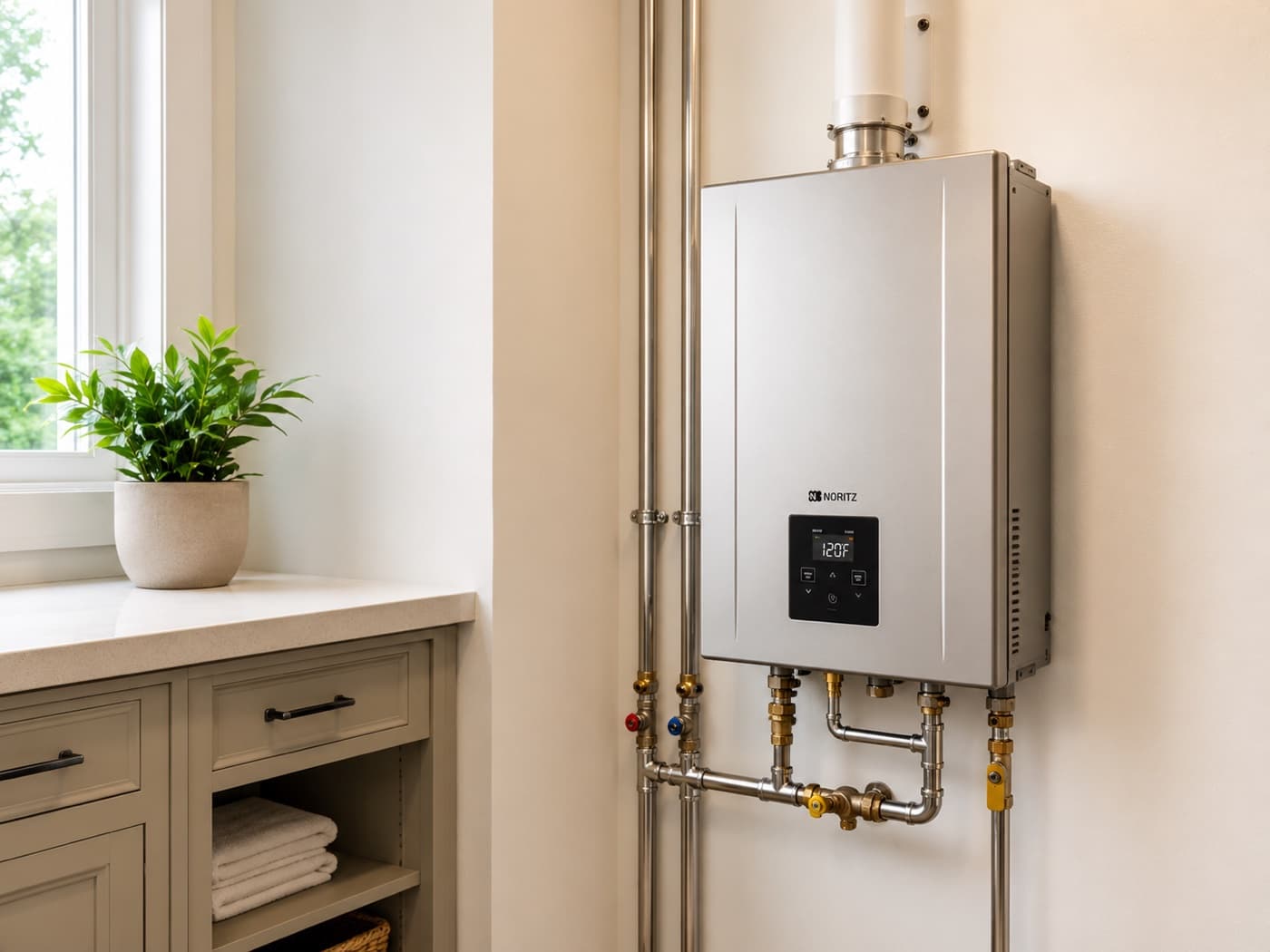
The savings are not one line item, which is why they are easy to overlook. Scale insulates the heating surface in a water heater, so the burner or element runs longer to reach the same temperature and the tank works harder for a shorter life. On a tankless unit the effect is sharper still: a scaled heat exchanger loses efficiency quickly and, in this water, needs annual descaling to stay under warranty. Softened water is what lets a water heater installation reach its rated life instead of half of it.
Appliances follow the same pattern. Dishwashers and washing machines have heating elements, seals, and small passages that scale narrows over time. Faucet cartridges stiffen. Aerators clog. None of these are dramatic failures; they are a steady stream of small replacements that a household simply gets used to paying for.
Then there is the part you notice daily. Soap and detergent work as designed in softened water, so less of both goes further, laundry comes out softer, and the film that hardness leaves on skin, hair, tile, and glass stops forming. A water softener installation is the only equipment that removes hardness minerals — filtration improves taste and removes contaminants, but it leaves calcium and magnesium exactly where they were.
Benefits of Whole House Water Filtration vs. Softening
These two get confused constantly, and installing the wrong one is an expensive way to learn the difference. A whole-house filter treats every tap in the building for chlorine or chloramine, sediment, iron, taste, and odor at full flow rate. It does not soften anything. A softener runs the water through resin that exchanges hardness minerals for sodium or potassium, which is a completely different process aimed at a completely different problem.
Most homes in this area benefit from both, in a specific order. The softener goes in first, at the point of entry, because it protects the plumbing and every appliance downstream. Filtration goes in after it for the chlorine and taste issues that softening does not touch, and it lasts longer fed by softened water. The water filtration options are worth comparing once hardness is handled.
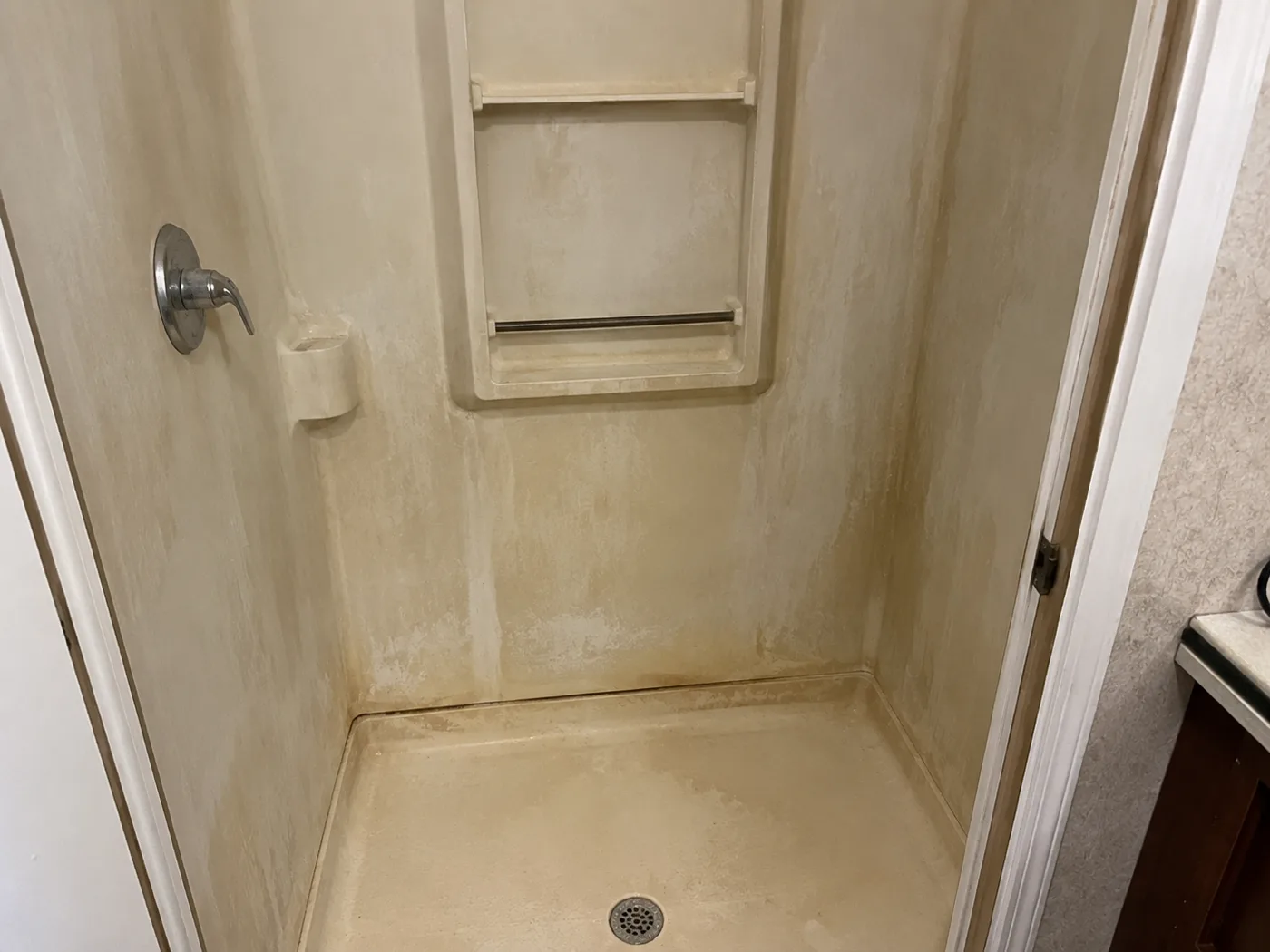
If the shower enclosure is already etched and filmed from years of untreated water, softening stops it getting worse but will not undo it. That is a resurfacing job — shower glazing restores the surface at a fraction of a full replacement, and it makes sense to do after the water is treated, not before.
- Softener: removes calcium and magnesium, stops scale, protects water heaters and appliances.
- Whole-house filter: removes chlorine, sediment, iron, taste, and odor at every tap.
- Order matters: softener first, filtration second — the filter media lasts longer that way.
- Neither is optional in hard water: filtration alone will not stop spotting, scale, or soap film.
Drain Cleaning Indianapolis Homeowners Could Often Have Skipped
Hardness does not clog a drain on its own. What it does is give everything else something to hold onto. Soap combines with calcium and magnesium to form soap scum — a genuinely sticky residue that coats the inside of a drain line and catches hair, grease, and food particles that would otherwise wash through. Over years, the effective diameter of the pipe shrinks.
That is the quiet link between untreated water and a recurring slow drain in a shower or kitchen sink. Clearing the blockage solves this month's problem; the coating that caused it is still there. Households on softened water tend to need drain repair and clearing less often, simply because there is less for debris to stick to.
It is the same story on the fixture side. Toilet fill valves, faucet cartridges, and shut-off valves all last longer without mineral deposits working into their seats. None of it shows up as a single big saving — it shows up as fewer service calls over a decade in the same house.
Pricing, Financing, and What Installation Day Involves
Indiana Flow publishes pricing online. Choose the service and Good, Better, and Best options appear immediately, itemized, in writing — no technician visit just to hear a number and no waiting on a callback. On softeners the tiers reflect real differences: grain capacity, resin quality, metered versus timed regeneration, and warranty length all move the price, and they are far easier to weigh side by side than one figure delivered at the kitchen table.
Larger jobs qualify for 0% financing through Wisetack over 6, 9, or 12 months, or four interest-free payments through Klarna, approved up front rather than negotiated after the invoice. Scheduling is typically same-week, Monday through Friday, 8am to 5pm.
The install itself is a half-day job in most Carmel homes. The unit ties into the main line where water enters the house, needs a drain for the regeneration cycle and a nearby outlet, and gets a bypass valve so the softener can be taken offline for service without shutting off water to the house. Sizing comes from the hardness reading and the number of people in the household — an undersized unit regenerates constantly and burns through salt, an oversized one is money spent for no gain.
Best Rated Plumber Near Westfield or Noblesville Indiana?
Indiana Flow holds a 5.0 star rating on Google and works across Hamilton County and the surrounding towns from 9753 Crosspoint Blvd, Suite 110 in Indianapolis. What is worth checking on any company you call, though, is the license — Indiana requires plumbing contractors to be licensed by the state, and the number should be given without hesitation. Indiana Flow's is PC12000053.
The other thing worth asking is who actually answers when you call. Omar and Ahmad Saltagi run this business themselves, so the person quoting the job is the person accountable for it. Every job carries a 1-year labor warranty, and the equipment installed is Rheem and Bradford White rather than whatever is cheapest that week.
Service covers Carmel, Westfield, Noblesville, Fishers, Zionsville, McCordsville, and Indianapolis. The full list of residential and commercial work handled locally is on the Carmel plumbing page.
Ready to Deal With the Hardness for Good?
Start with a test. Hardness in grains per gallon, iron, and pH decide the capacity and the equipment, and sizing from a guess is how households end up with a unit that runs constantly or one that never keeps up. It takes one visit and it settles the question at your specific address.
Call 317-IND-FLOW (317-463-3569) or request an instant estimate online. Family-owned, licensed PC12000053, insured, same-week scheduling. Go with the flow.
Frequently Asked Questions
Who is the best rated plumber near Westfield or Noblesville, Indiana?
Indiana Flow holds a 5.0 star rating on Google and serves Westfield, Noblesville, Carmel, Fishers, Zionsville, McCordsville, and Indianapolis. It is family-owned and run personally by Omar and Ahmad Saltagi, licensed in Indiana under PC12000053, insured, and every job carries a 1-year labor warranty. Pricing is published online with itemized Good, Better, and Best options, so you can see a real number before scheduling anything.
How much does water softener installation cost in Carmel, IN?
It depends on the grain capacity the household needs and the equipment tier, which is why Indiana Flow publishes Good, Better, and Best options online instead of quoting a single figure. You get an itemized price in writing without a technician visit first, and jobs that run into the thousands qualify for 0% financing through Wisetack over 6, 9, or 12 months or four interest-free payments through Klarna.
Is the water in Carmel, Indiana hard enough to need a softener?
Yes. Central Indiana water typically tests between 15 and 25 grains per gallon, which is classified as very hard — anything above 10 is usually enough to justify treatment. That level of hardness scales water heaters, shortens appliance life, etches glass permanently, and leaves the soap film and spotting most homeowners notice long before they know the cause.
Will a whole house water filter fix hard water?
No. Carbon filtration and reverse osmosis improve taste and remove contaminants like chlorine, sediment, and dissolved solids, but neither removes the calcium and magnesium that cause hardness. Only an ion-exchange water softener does that. In this area most homes install a softener at the point of entry first, then add filtration behind it.
How long does a water softener take to install?
Most installations in a Carmel home take half a day. The unit ties into the main water line where it enters the house, needs a drain for the regeneration cycle and a nearby outlet, and gets a bypass valve for future service. Scheduling is typically same-week, Monday through Friday, 8am to 5pm — call 317-463-3569 to book.