
Homeowner Guide
After a Flood: What to Check in Your Home
Central Indiana saw historic flooding in August 2026. If water reached your basement or mechanical room, here is what a licensed plumber would look at — in the order it matters.
- ✓Upfront pricing — no storm surcharges
- ✓ 1-year labor warranty on every job
- ✓ Licensed Indiana plumber (PC12000053)
- ✓Mon–Fri, 8am–5pm
Request a Free Assessment
Tell us what you're seeing and we'll follow up within minutes.
Where to Start
The Damage You Can't See Is the Expensive Part
Standing water gets cleaned up quickly. The equipment it touched is what tends to fail two months later.
Beginning August 11, 2026, repeated storms dropped historic rainfall across central Indiana. Communities along the White River corridor — including Carmel, Fishers, Noblesville, and Westfield — saw water in places that had never taken water before. A statewide disaster proclamation and a federal emergency declaration followed.
Once the water is out and the drying begins, most homeowners focus on flooring, drywall, and furniture. That's understandable, but it skips the part of the house that quietly determines whether you have another bad week in October. Gas appliances, pumps, and water treatment equipment all behave the same way after a flood: they often keep working for a while, and then they don't.
This page walks through what Indiana Flow checks in a home that took on water — what genuinely needs replacing, what can be serviced, and what can wait. If you'd rather have someone look at it directly, we're a family-owned, licensed Indiana plumbing company serving Indianapolis and Hamilton County, and the assessment is free.
Before Anything Else
Safety Checks Before You Go Back Downstairs
None of this requires a plumber. All of it should happen before you start assessing damage.
Do not enter standing water
If water is touching outlets, the electrical panel, or any appliance, keep out until power to the area is shut off at the main breaker — and only if you can reach the panel without standing in water. If you can't, call your utility.
Treat flood water as contaminated
Water that has moved through streets, yards, or a backed-up floor drain carries sewage, fuel, and lawn chemicals. Wear boots and gloves, keep children and pets out, and wash thoroughly afterward.
Smell gas? Leave first, call second
Flood water can shift appliances and stress gas connections. If you smell gas or hear hissing, leave the house before calling. Contact your gas utility from outside, then call us once they clear the home.
Don't relight a submerged appliance
A water heater or furnace that has been underwater should not be relit or reset, even if it looks fine and the pilot will catch. The controls are safety devices and they are not designed to be dried out.
Priority One
A Submerged Water Heater Gets Replaced, Not Repaired
This is the single most common piece of bad advice we hear after a flood.
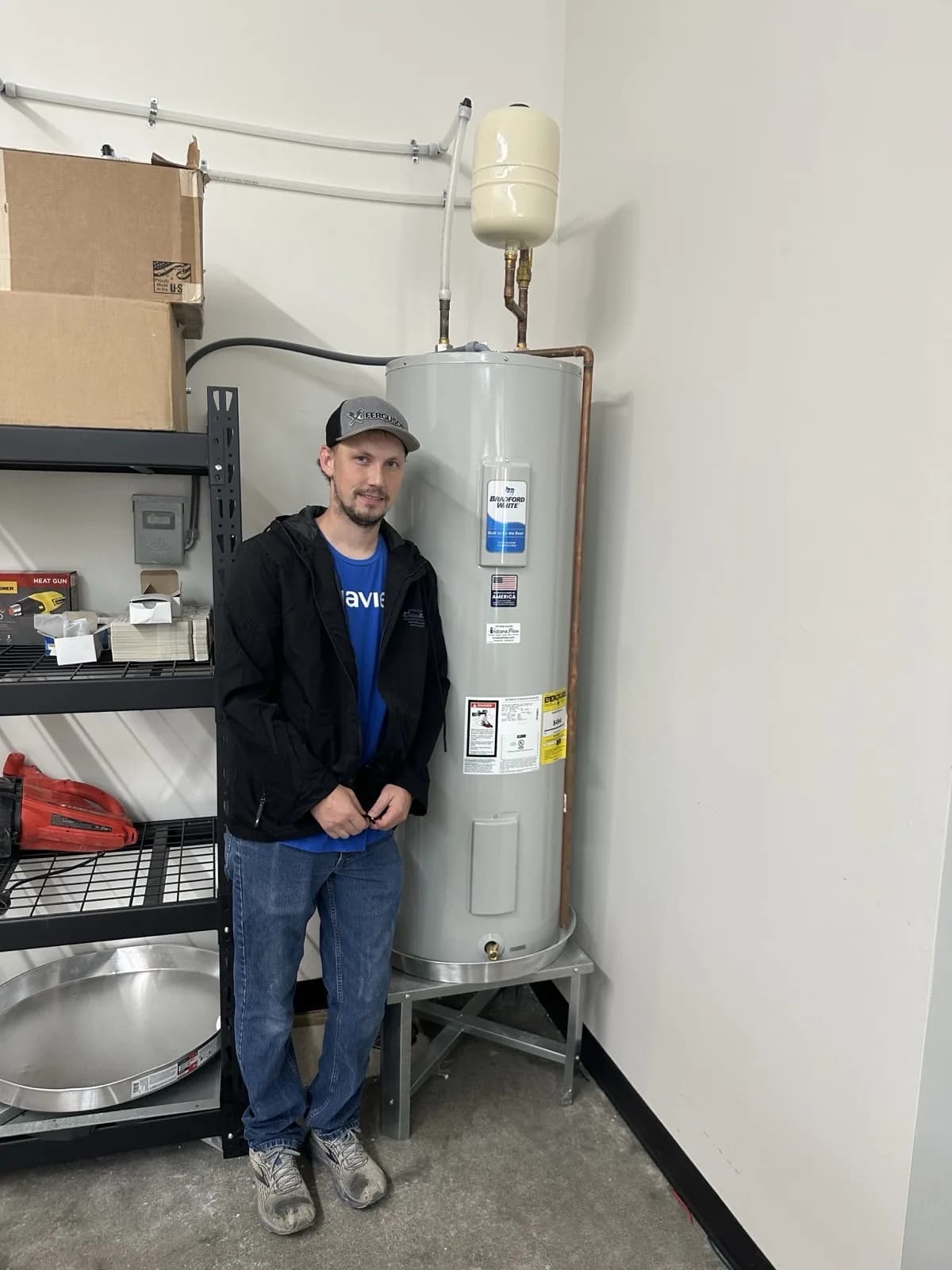
If flood water reached the bottom of your water heater, the unit needs to be replaced. Not dried out, not relit, not “watched for a while.” On a gas heater, the burner assembly and the gas control valve sit at the base of the tank — and that control valve is a safety device. Once it's been submerged, manufacturers direct that it be replaced rather than dried, because internal corrosion can cause it to fail long after the outside looks clean.
Electric units have the same problem in a different form. The lower thermostat and heating element are near the floor, and the insulation packed between the steel tank and the outer jacket acts like a sponge. It absorbs contaminated water, it cannot be dried in place, and it holds moisture against the tank wall where it accelerates rust from the outside in.
The frustrating part is that a flooded heater usually keeps making hot water. Homeowners take that as proof it survived, and the failure arrives weeks later — sometimes as a cold shower, sometimes as a tank that lets go and floods the basement a second time.
We replace water heaters with Rheem and Bradford White units, quote the job upfront with Good/Better/Best options before any work starts, and back the labor for a year. See our water heater installation and repair page for pricing and options.
Priority Two
Your Sump Pump Just Did a Decade of Work in a Week
Whether it kept up or gave out, it earned an inspection.
Residential sump pumps are designed for intermittent duty. The motor runs for thirty seconds, clears the pit, and rests. That duty cycle is what gets you seven to ten years out of a pump. Running continuously for days is a completely different kind of load, and it takes real life off the motor, the bearings, and the float switch.
So a pump that kept your basement dry through August is not necessarily a pump you should count on in October. Worth testing now: pour a bucket of water into the pit and confirm the float rises, the pump starts promptly, the water level drops, and the motor shuts off cleanly. Grinding, rattling, short-cycling, or a pump that runs without moving water all mean it needs service.
If yours failed because the power went out, that's the argument for a battery backup in one sentence. The worst flooding and the grid outage arrive together, which is exactly when the primary pump is useless. A backup unit runs off its own battery and covers that window.
Full detail on pumps, backups, and sewage ejectors is on our sump pump installation and repair page.
Priority Three
Sediment, Softeners, and Water You Can Taste
Flooding changes what comes out of the tap, and treatment equipment takes the hit.
Major rain events stir up sediment throughout municipal distribution lines, and main breaks during flooding push even more of it downstream. That sediment reaches your house whether or not you took on water. The first signs are cloudy or gritty water, aerators that clog within days, and filter cartridges that load up months ahead of schedule.
Water softeners are particularly exposed. Heavy sediment fouls the resin bed, which costs you softening capacity and can eventually plug the unit. If the softener itself was standing in flood water, the control valve and the brine tank are contaminated and the unit generally needs to be replaced rather than cleaned — the same logic as the water heater.
If you're on a private well and the wellhead was flooded, the water should be treated as unsafe until the well has been disinfected and tested. That's a health department process, not a plumbing one, and we'll tell you so rather than sell you a filter.
For most homes on city water, the practical steps are simple: run the cold taps until they clear, clean or replace the aerators, and change every filter cartridge in the house earlier than you normally would. If a boil advisory was issued for your area, replace cartridges after it lifts — not during.
If the water still doesn't clear, or you're seeing staining, odor, or a sudden change in how the water feels, the softener or filtration system likely needs attention. We can test the water and tell you which it is.
More on both systems: water softener installation and repair and whole-home water filtration.
If Water Came Up, Not In
Floor Drain Backups and Combined Sewers
Where the water entered tells you what to fix.
There's a meaningful difference between water that came in through a window well or foundation crack and water that came up through the basement floor drain. The second one points at the sewer.
Older parts of Indianapolis are served by combined sewers, where storm runoff and sanitary waste share a single pipe. When rainfall exceeds what that system can carry, the excess has to go somewhere, and the lowest opening in your home is often a basement floor drain. That's why a backup can happen in a house that never took on surface water at all.
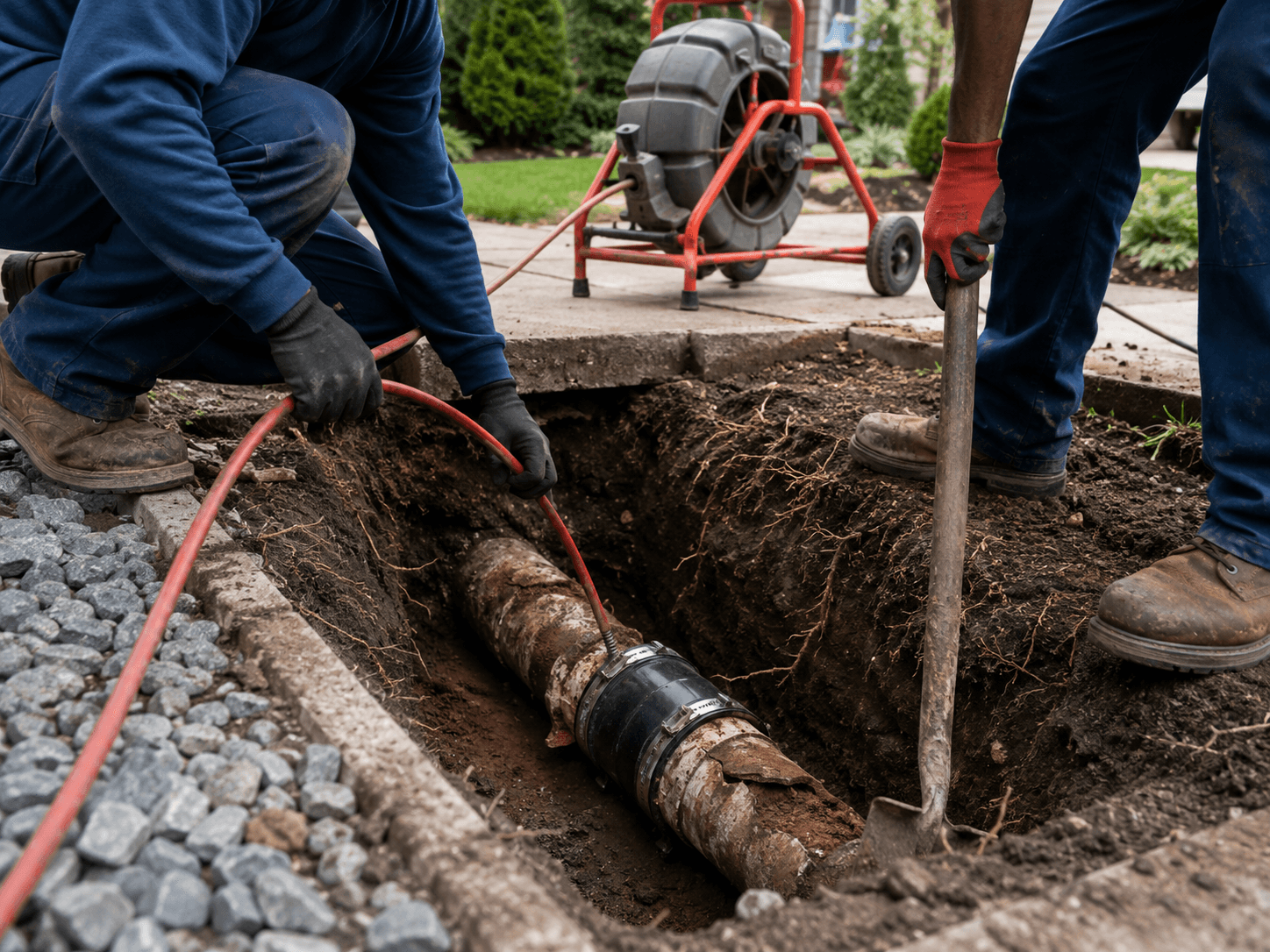
A home that backed up once will usually back up again, and the condition of your own sewer lateral is the part you can actually control. Roots, a partial blockage, a sag, or a cracked line all reduce the margin you have before the next storm pushes water the wrong direction. After a backup, it's worth having the line camera-inspected while the problem is fresh — and worth asking about a backwater valve if your home doesn't have one.
We handle drain repair, sewer line repair and replacement, and leak detection across Indianapolis and Hamilton County.
Paperwork
Document Everything Before You Replace It
Five minutes with a phone camera is worth a great deal later.
Before anything gets hauled out, photograph it. Get the water line on the wall, the equipment where it stands, and the data plate on every appliance — the model and serial number on a water heater or softener is exactly what an adjuster will ask for and exactly what gets thrown away with the unit.
A note worth knowing: standard homeowners policies generally do not cover flood damage. That's separate flood insurance. Sewer and drain backup is often its own optional endorsement as well. Whether you have either is worth confirming with your agent before you assume a claim is coming — we're plumbers, not adjusters, and we won't guess at your coverage for you.
With the federal emergency declaration in place for Indiana, federal disaster assistance is available to affected residents. Applications and eligibility information are at DisasterAssistance.gov. We have no involvement in that process and nothing to gain from it — it's simply the first place to look.
One more thing, plainly: our pricing has not changed because of the flooding. The same upfront Good/Better/Best quote you'd have gotten in July is the one you'll get today.
Common Questions
Flood Recovery FAQs
Straight answers to what Indianapolis homeowners are asking right now.
Does a flooded water heater have to be replaced?
In almost every case, yes. Once flood water reaches the burner assembly and gas control valve on a gas unit — or the thermostats and elements on an electric one — those parts can't be reliably dried and returned to service. Manufacturers direct that submerged gas controls be replaced rather than dried out, because a corroded gas valve can fail without warning. The insulation between the tank and the outer jacket also soaks up contaminated water and can't be dried in place. A unit that seems to work today can fail weeks later.
My sump pump kept up during the flood. Does it still need to be looked at?
It's worth checking. Most residential sump pumps are built for intermittent duty — short cycles with long rests. Running for days on end during a major rain event puts far more wear on the motor and float switch than a normal season does. A pump that survived the storm may still be near the end of its life, and the next heavy rain is when you'd find out.
Why is my water discolored or full of sediment after the flooding?
Heavy rain and main breaks stir up sediment in municipal lines, and that sediment travels into your home. It clogs faucet aerators, loads up filter cartridges early, and can foul the resin bed in a water softener. If your water is cloudy, gritty, or has an odor, start by replacing filter cartridges — and if it doesn't clear, have the softener and filtration system checked.
Water came up through my basement floor drain. Is that a plumbing problem or a flooding problem?
It can be both. Older parts of Indianapolis are served by combined sewers that carry storm water and sewage in the same pipe. When rainfall overwhelms that system, the water can back up through the lowest opening in your home, which is usually a basement floor drain. Once the water recedes, it's worth having the line inspected — a partially blocked or damaged lateral makes a backup far more likely the next time.
How soon should I have this work done?
Safety items first — gas appliances and anything electrical. After that, water heaters and sump pumps are the priority, because both tend to fail quietly and both are far more expensive to deal with as an emergency than as a scheduled replacement. Water treatment equipment can usually wait a few weeks. Call us and we'll tell you honestly where you sit.
Serving Carmel, Fishers, Noblesville, Westfield, and Indianapolis.
Free Assessment
Not Sure What Needs Replacing?
Send us a note describing what took on water and what you're seeing now. We'll tell you what genuinely needs to be replaced, what can be serviced, and what can wait — with upfront pricing and no storm surcharge. Licensed Indiana plumber, family-owned, 1-year labor warranty.
Call 317-IND-FLOWRequest a Free Assessment
We'll follow up within minutes.