Water Softeners
Water Softener Installation & Repair in Indianapolis
Indianapolis has some of the hardest water in Indiana. Indiana Flow installs whole-house water softeners that protect your pipes, appliances, and family from the effects of high-mineral water.
- ✓Upfront pricing — instant online estimates
- ✓1-year labor warranty on every job
- ✓Licensed Indiana plumber (PC12000053)
- ✓Mon–Fri, 8am–5pm
Get a Free Estimate
We'll follow up within minutes.
Water Softener Installation in Indianapolis
Indiana Flow installs whole-house water softeners for homes in Indianapolis and Hamilton County. Installation usually takes about half a day and typically costs $1,200 to $2,800, depending on system size and how hard your water is. We install high-efficiency Rheem and Watco systems and give you itemized Good/Better/Best pricing before any work starts.
Indianapolis Hard Water
Why Indianapolis Homes Need a Water Softener
Indianapolis draws its water supply from White River and Eagle Creek Reservoir, both of which pass through limestone-heavy terrain. By the time that water reaches your tap, it carries significant concentrations of dissolved calcium and magnesium — the minerals that define hard water. Indianapolis municipal water regularly measures between 15 and 25 grains per gallon (gpg), which falls in the “very hard” category by water quality standards. For context, the U.S. Geological Survey classifies anything above 10.5 gpg as very hard.
Hard water is not a health risk, but it is a home maintenance problem. Those dissolved minerals do not stay dissolved forever — every time hard water heats up, slows down, or evaporates, calcium and magnesium drop out of suspension and form scale. That scale builds up inside your water heater tank, on your pipe walls, and inside every appliance that uses water. Over time, it shortens appliance life, raises your energy bills, and leads to expensive repairs.
A whole-house water softener installed at your main supply line solves the problem at the source. Indiana Flow installs Rheem and Watco softener systems sized for Indianapolis homes, from starter units for a two-person household to high-capacity systems for larger families with heavy water use. Every installation includes a bypass valve, proper drain connection, and a full walkthrough of the system. We hold Indiana plumbing license PC12000053 and back all work with a 1-year labor warranty.
August 2026 Flooding
What the Flooding Did to Water Softeners
Heavy rain stirs up sediment throughout municipal lines, and that sediment fouls the resin bed in a softener — costing you capacity and eventually plugging the unit. If the softener itself stood in flood water, the control valve and brine tank are contaminated and the system generally needs to be replaced rather than cleaned.
Read our flood recovery guide for homeowners →Know the Warning Signs
Signs You Have Hard Water
Most homeowners do not realize hard water is the cause until several of these problems appear at once.
White, Chalky Deposits on Fixtures
That crusty buildup around your faucet aerators, showerheads, and sink drains is calcium carbonate — a direct sign that Indianapolis municipal water is leaving minerals behind every time water evaporates.
Stubborn Soap Scum
Hard water reacts with soap to form an insoluble curd that coats your shower walls, tub, and glass doors. No matter how often you scrub, it comes back because the root cause — dissolved minerals — is still in the water.
Stiff, Scratchy Laundry
Minerals bond to fabric fibers during the wash cycle, leaving towels and clothes feeling rough and looking dull even after washing. Colors fade faster and whites turn gray.
Dry Skin and Brittle Hair
Calcium and magnesium interfere with your skin's natural moisture barrier and prevent shampoo from lathering properly, leaving a film on your hair and scalp after every shower.
Reduced Water Pressure
Scale builds up inside your pipes over time, narrowing the passage water flows through. This is especially common in older Indianapolis homes with original supply lines still in place.
Cloudy Dishes and Glassware
Minerals in hard water leave spots and a foggy film on dishes fresh out of the dishwasher — even when you use extra detergent or rinse aid.
Frequent Water Heater and Appliance Repairs
Scale accumulates on water heater heating elements and inside dishwashers, washing machines, and coffee makers. According to water quality research, just a quarter-inch of scale on a heating element can reduce its efficiency by up to 40 percent.
How It Works
How a Water Softener Works
A whole-house water softener uses a process called ion exchange to remove calcium and magnesium from your water before it reaches any fixture or appliance. Inside the main tank is a bed of small resin beads coated with sodium ions. As hard water passes through the resin, the calcium and magnesium ions — which have a stronger charge — knock the sodium ions off the beads and take their place. The water that flows out the other side carries trace sodium but no calcium or magnesium.
Over time, the resin beads become saturated with hardness minerals and need to be recharged. This is the regeneration cycle. The system draws a brine solution (salt dissolved in water) from a separate tank and flushes it through the resin. The high concentration of sodium in the brine displaces the calcium and magnesium, flushing them down the drain. The resin beads are then fully recharged and ready to soften water again.
Modern high-efficiency softeners like the Rheem and Watco systems we install use demand-initiated regeneration — the system monitors actual water use and only regenerates when needed, rather than on a fixed timer schedule. This reduces salt use, water waste, and operating costs compared to older technology.
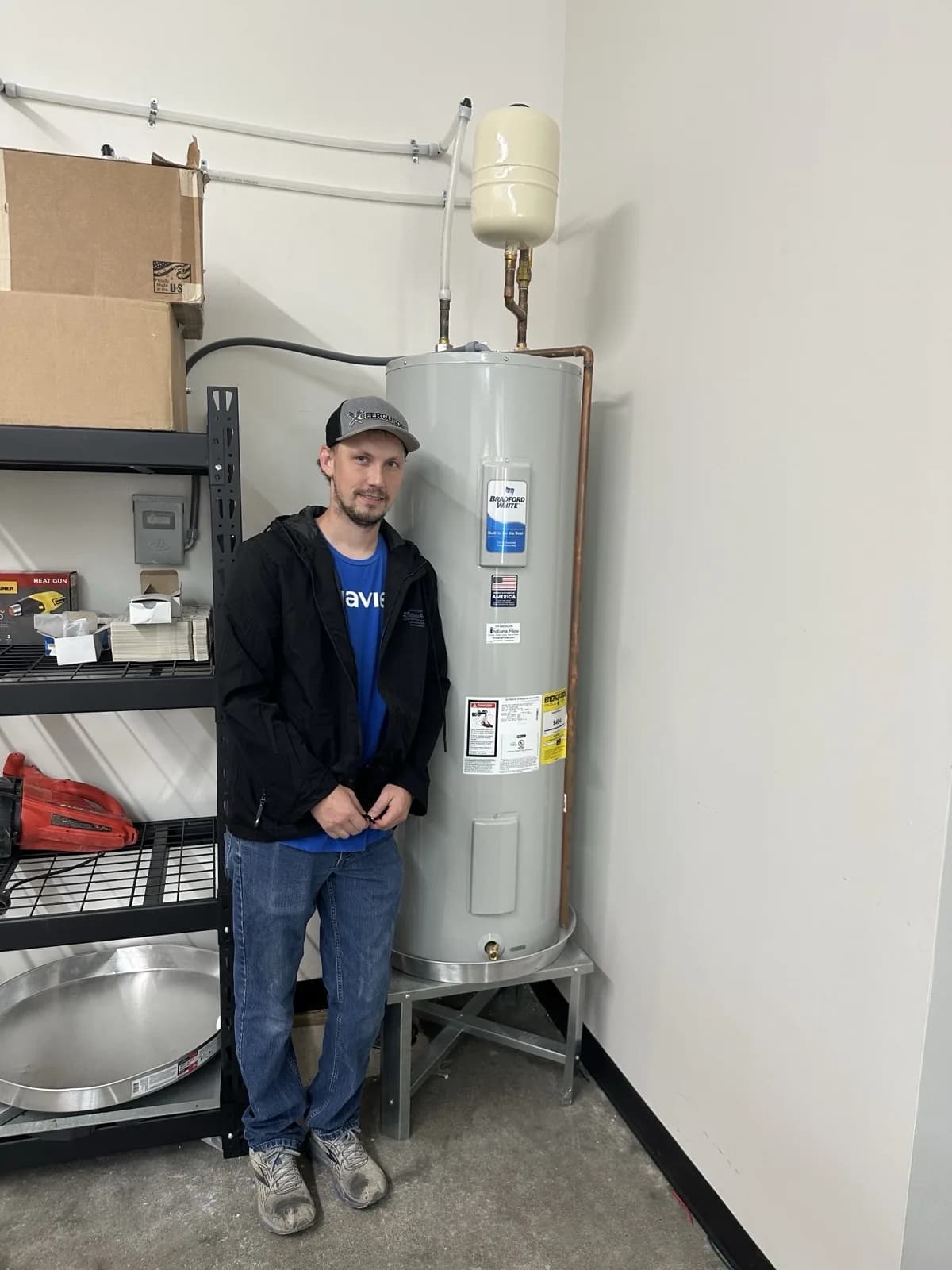
Soft water means no more mineral spots on fixtures or dishes.
What You Gain
Benefits of Softened Water
Soft water improves nearly every part of your home that uses water — from your morning shower to your monthly utility bill.
Extends Water Heater Life
Soft water eliminates scale buildup on tank liners and heating elements, allowing your water heater to run at rated efficiency and reach its full 10- to 15-year lifespan instead of failing early.
Protects Your Pipes and Fixtures
Without dissolved minerals constantly depositing inside supply lines, your pipes stay clear, flow stays strong, and faucets and valves last years longer.
Softer Skin and Healthier Hair
Removing calcium and magnesium from your water lets soap rinse completely, restoring your skin's natural moisture balance and leaving hair noticeably softer after just a few washes.
Spot-Free Dishes and Glassware
Soft water eliminates the mineral residue that causes water spots on dishes, glasses, and cookware — dishwashers work more effectively and use less detergent.
Brighter, Softer Laundry
Without minerals embedding in fabric fibers, colors stay vivid, whites stay white, and towels and bedding feel the way they looked in the store.
Lower Repair and Product Costs
Soft water homes typically use 50 to 75 percent less soap, shampoo, and cleaning products. Fewer appliance repairs and longer equipment life add up to real savings year over year.
If you already have a water heater showing early signs of scale damage — such as rumbling or popping sounds during heating cycles, or reduced hot water output — adding a water softener now can extend its remaining life significantly. We frequently install softeners alongside water heater replacements in Indianapolis homes to protect the new equipment from day one.
Softening vs. Filtration
Water Softener or Water Filter? What Each One Does
The two get confused constantly, and installing the wrong one is an expensive way to learn the difference.
Water Softener
Runs water through resin that exchanges calcium and magnesium for sodium. It stops scale, spotting, and soap film and protects your water heater and appliances. It does not remove chlorine or change how your water tastes.
Whole-House Filter
Removes chlorine or chloramine, sediment, iron, taste, and odor at every tap. It does not soften anything — calcium and magnesium pass straight through, so scale and spotting continue.
Many homes here benefit from both, installed in a specific order. The softener goes in first at the point of entry, because it protects the plumbing and everything downstream. Filtration goes after it for the chlorine and taste issues softening does not touch, and the filter media lasts longer when it is fed softened water. Compare the options on our whole-home water filtration page once hardness is handled. Softening also stops etching on glass shower doors and chrome from getting worse, but it will not reverse damage that is already there.

Equipment We Install
Brands We Install
Indiana Flow installs Rheem and Watco water softener systems — two brands we trust for quality, reliability, and long-term performance in the Indianapolis climate.
Rheem is one of the most recognized names in residential water treatment. Their softener lineup covers grain capacities from 32,000 for smaller homes up to 80,000 for large households or homes with very high hardness levels. Rheem systems use demand-initiated regeneration and are built for low salt and water consumption. We stock Rheem parts locally so service calls are fast if anything needs attention down the line.
Watco systems offer an excellent balance of performance and value for Indianapolis homeowners looking to invest in water quality without overspending. Watco softeners are built with commercial-grade valves and are compatible with standard salt types available at local hardware stores.
Not sure which system is right for your home? We assess your household size, current water hardness, and budget to recommend the right capacity. We also pair softeners with our water filtration systems for homeowners who want both softened and filtered water at the tap. We're proud to be serving Carmel homeowners with the same water softener installation and repair service.
Sizing & Installation
Sizing Your Softener and What Installation Day Involves
Sizing starts with a hardness reading, not a guess. Hardness in grains per gallon, iron content, and the number of people in the house decide the grain capacity you need. An undersized unit regenerates constantly and burns through salt; an oversized one is money spent for no gain. Our guide to hard water in Indianapolis explains what the numbers mean.
Our Good/Better/Best pricing reflects real differences between tiers: grain capacity, resin quality, metered versus timed regeneration, and warranty length. Each option is itemized in writing, and 0% financing is available through Wisetack or Klarna.
Most installations take about half a day. The softener ties into the main line where water enters the house, connects to a drain for the regeneration cycle, plugs into a nearby outlet, and gets a bypass valve so it can be serviced later without shutting off water to the whole house. Before we leave, we set the unit to your hardness reading and walk you through adding salt and using the bypass.
Common Questions
Frequently Asked Questions
Answers to what Indianapolis homeowners ask us most before scheduling a water softener installation.
How much does a water softener installation cost in Indianapolis?
A whole-house water softener installation in the Indianapolis area typically runs between $1,200 and $2,800, depending on the system capacity, water hardness level, and any existing plumbing modifications needed. Indiana Flow provides transparent Good/Better/Best pricing upfront so you know what you're paying before we schedule the job — no surprise labor charges.
How much salt does a water softener use?
Most households use between 6 and 10 pounds of salt per week, though this varies based on household size, water hardness, and system efficiency. High-efficiency systems like the Rheem and Watco units we install are designed to regenerate only when needed, reducing salt consumption compared to older timer-based models.
Do I need a licensed plumber to install a water softener?
In Indiana, connecting a water softener to your home's supply lines and drain involves work on your plumbing system, which requires a licensed plumber. Improper installation can void equipment warranties, cause leaks, and create code violations. Indiana Flow holds Indiana plumbing license PC12000053 and handles the full installation including bypass valves, drain line connection, and brine tank setup.
How long does a water softener last?
A quality whole-house water softener installed and maintained correctly typically lasts 15 to 20 years. Regular salt replenishment, annual resin cleaning, and periodic valve inspection keep the system running efficiently. Indiana Flow backs all installations with a 1-year labor warranty on work and parts we supply.
Will a water softener affect my water pressure?
A properly sized and installed water softener has no noticeable impact on water pressure. In fact, many homeowners report better pressure over time as existing scale deposits in pipes gradually clear. If you currently have low pressure due to years of mineral buildup, we may recommend a pipe inspection alongside your softener installation — see our drain and pipe repair services for more.
Will a whole-house water filter fix hard water?
No. Carbon filtration and reverse osmosis improve taste and remove contaminants like chlorine, sediment, and dissolved solids, but neither removes the calcium and magnesium that cause hardness. Only an ion-exchange water softener does that. In most Indianapolis-area homes the softener goes in at the point of entry first, with filtration added after it.
How long does a water softener installation take?
Most installations take about half a day. The softener ties into the main line where water enters the house, connects to a drain for the regeneration cycle, plugs into a nearby outlet, and gets a bypass valve so it can be serviced later without shutting off water to the house. We schedule same-week where possible, Monday through Friday, 8am–5pm.
Free Estimate
Ready to Get Started?
Stop fighting the effects of hard water every day. Indiana Flow will assess your home's water hardness and recommend the right system at a price that makes sense. We serve Indianapolis, Carmel, Fishers, Westfield, Noblesville, Zionsville, and McCordsville. Financing available through Wisetack and Klarna with 0% interest options.
Call 317-IND-FLOWRequest a Free Estimate
We'll follow up within minutes.