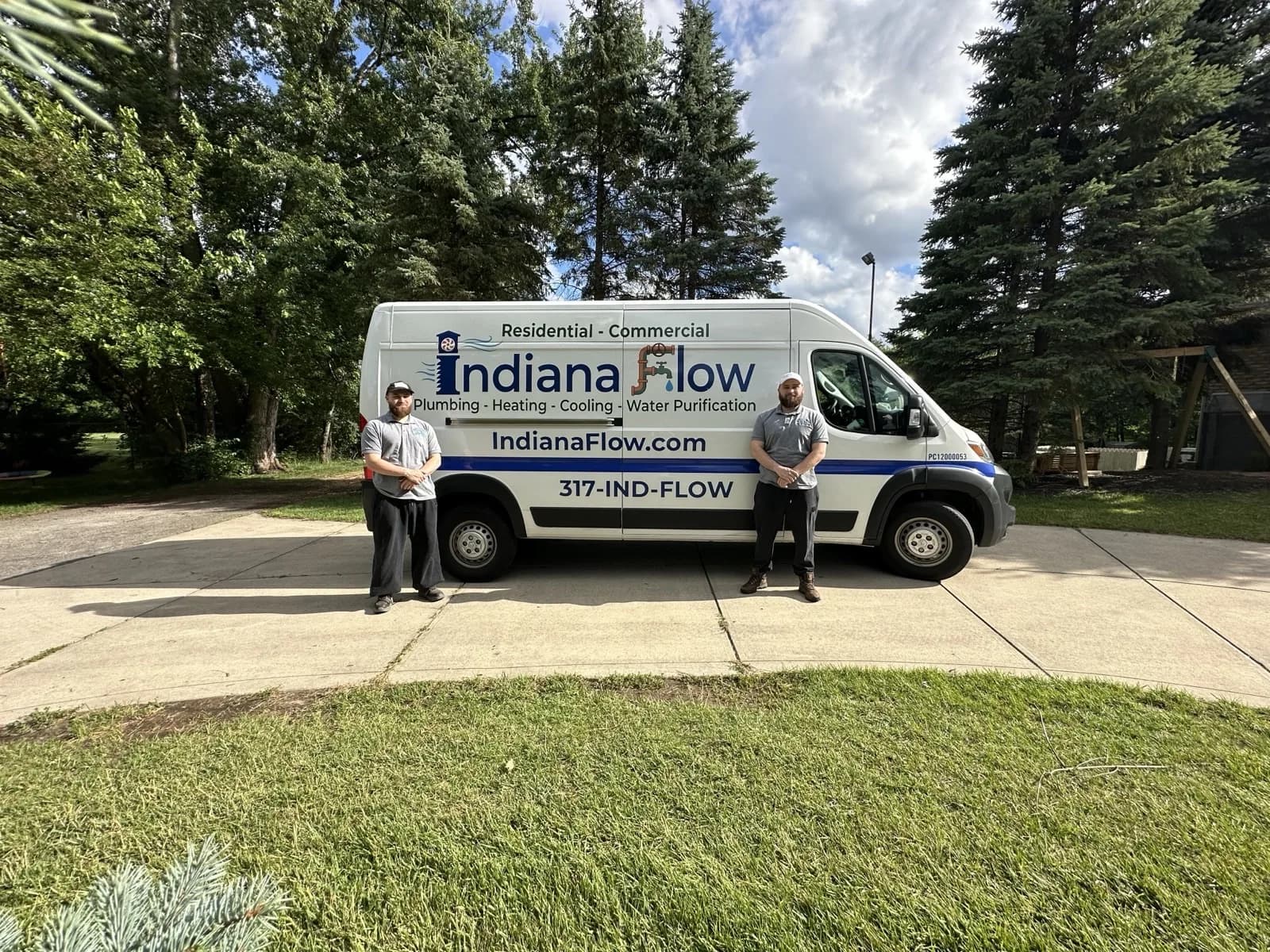
Hard water and a chlorine taste are two different problems, and a water softener and a water filter each solve only one of them. Indiana Flow is a family-owned plumbing company run by Omar and Ahmad Saltagi and licensed in Indiana under PC12000053, and we install both across Indianapolis and Hamilton County. Here is how to tell which one your home needs, and when it needs both.
The Short Answer
A water softener removes the calcium and magnesium that cause scale, while a water filter removes chlorine, sediment and odor. Indiana Flow, a plumbing company in Indianapolis, Indiana, recommends a softener for white crust and spotty dishes, a filter for taste and smell, and both when a home has both problems.
How a Water Softener Works
A softener uses ion exchange. Water passes through a tank of resin beads that grab the hardness minerals, calcium and magnesium, and trade them for sodium or potassium. When the beads fill up, the system flushes itself with a salt brine and starts over.
Central Indiana water commonly runs 15 to 25 grains per gallon, which is very hard. That is why scale builds so quickly on fixtures, inside pipes and on the heating element of a water heater. Take the minerals out and the scale stops forming. If you want the full list of warning signs and what a softener costs, our guide to hard water in Indianapolis covers it.
How a Water Filter Cleans Your Water
A filter strains or adsorbs unwanted material out of the water. A whole-house carbon filter treats every tap and is effective against chlorine, chloramines, sediment and the musty odors that can come with municipal water. An under-sink reverse osmosis system goes further and cleans up drinking water at one faucet, removing 95 percent or more of dissolved solids, including lead, nitrates and fluoride.
Our water filtration systems are chosen by what is actually bothering you: taste, smell, grit, or a specific contaminant. None of these filters is meant to soften water.
Softener vs. Filter, Side by Side
The easiest way to separate them is by the problem each one is built to fix:
- Scale and white crust: a softener stops it; a filter does not.
- Chlorine taste and smell: a carbon filter handles it; a softener does not.
- Sediment and grit: a filter catches it; a softener is not designed for it.
- Dry skin and stiff laundry from hard water: a softener fixes the cause; a filter will not.
- Drinking water purity: reverse osmosis at the sink is the strongest option; a softener adds nothing here.
What Stays in the Water After Softening
This is where most confusion starts. A softener changes hardness, and that is its whole job. It is not designed to remove chlorine, chloramines, lead, nitrates or sediment, so soft water can still taste like a swimming pool.
If your complaint is the taste or smell of the water, adding a softener will not fix it. If your complaint is crust on the faucet, adding a filter will not fix that either. Matching the equipment to the symptom is what keeps you from paying for the wrong system.
Signs You Need a Softener, a Filter, or Both
Look at what you notice day to day:
- Softener signs: white chalky deposits on faucets, soap scum that returns days after cleaning, spotted glassware, scratchy towels and a water heater that struggles.
- Filter signs: a chlorine smell, cloudy water when the tap first opens, grit in the glass, or a taste you would rather not drink.
- Both: if the first list and the second list each sound familiar, the home needs hardness removal and filtration, and a combined softener-and-filter system handles both.
Which One Fits an Indianapolis Home?
Because central Indiana water is so hard, a softener is the upgrade that protects the most: pipes, fixtures, dishwasher, washing machine and water heater all last longer without scale. A filter is a smart add-on when taste or smell bothers you, or when you want a dedicated drinking water tap.
For most households the order of priority is simple. Treat hardness first if you see scale, treat taste and odor second, and size both together so water pressure stays strong. If you are not sure where your home falls, our Indianapolis plumbers can look at your water, your symptoms and your plumbing before recommending anything.
What Installation Costs and How We Quote It
A whole-house softener installation in the Indianapolis area typically runs between $1,200 and $2,800, depending on system capacity, hardness level and any plumbing changes needed. Filtration pricing depends on whether you choose a whole-house carbon system, an under-sink reverse osmosis unit, or a combination.
Indiana Flow gives instant online Good, Better and Best quotes that are itemized and in writing, with no callback required. We install Rheem and Watco softener systems, back our labor with a one-year warranty, and offer 0% financing through Wisetack and Klarna. We are open Monday through Friday, 8am to 5pm.
The Bottom Line
A softener fixes hard water and a filter fixes taste, smell and contaminants. Most Indianapolis homes need the softener, some also want a filter, and the right answer comes from your symptoms rather than a sales pitch. For a straight recommendation on water softener installation or filtration, call Indiana Flow at 317-463-3569 or request an instant quote online.
Frequently Asked Questions
Do I need a water softener or a water filter?
If you see scale, white crust or spotted dishes, you need a water softener; if the problem is chlorine taste, odor or sediment, you need a water filter. Many Indianapolis homes have both problems and benefit from a combined system, since central Indiana water is very hard.
Can a water filter replace a water softener?
No, a standard water filter does not remove the calcium and magnesium that cause hard water. Carbon and sediment filters improve taste, smell and clarity, but only an ion-exchange softener removes hardness minerals.
Does a water softener remove chlorine or lead?
No, a softener is not designed to remove chlorine, chloramines or lead. For those, a carbon filter handles chlorine and chloramines, and an under-sink reverse osmosis system is the stronger option for drinking water.
Can I install a water softener and a water filter together?
Yes, and for many homes that is the best setup. A softener protects pipes and appliances from scale while a filter improves taste and odor, and Indiana Flow sizes them together so water pressure stays strong.
How much does a water softener cost in Indianapolis?
A whole-house softener installation in the Indianapolis area typically runs between $1,200 and $2,800. The final price depends on capacity, your water hardness and any plumbing changes, and Indiana Flow shows itemized Good, Better and Best pricing online before we arrive.
Is reverse osmosis the same as a water filter?
Reverse osmosis is a type of filtration, but it is much finer than a basic carbon filter. An under-sink RO system removes 95 percent or more of dissolved solids at one faucet, while a whole-house carbon filter treats all the water entering the home.